

Robot Software Deal Maintenance: Trace a Release Tag
2026-11-01
Robot Software Deal Maintenance: Trace a Release Tag
A software document in a robot deal refers to a release tag, but a later review appears to reach a different revision from the one originally received. The maintenance task is to preserve the reference and delivered artifact before assigning a cause. This fictional case changes no repository or release, downloads no software and makes no allegation about a real supplier.
The delivered artifact remains the starting point
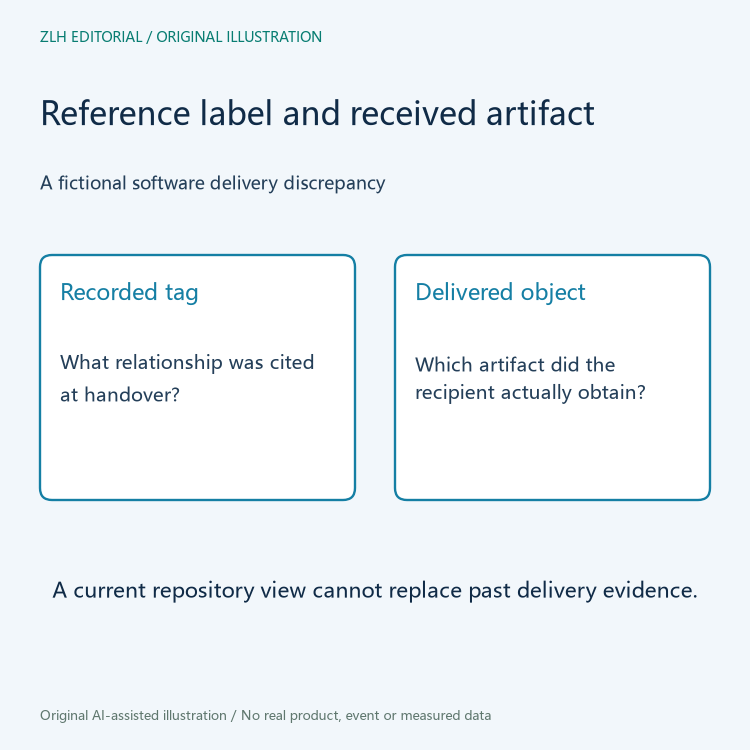
Retain the software-delivery record, the tag reference written in the agreement's supporting material and any authorized explanation of the artifact received. If the original artifact is unavailable, state that limitation. A current repository view cannot silently replace the object that the recipient actually accepted for review.
Imagine that a coordinator has a release-page screenshot from the handover and a later observation of the same tag label. Preserve both with their sources. The shared label is an important clue, but the maintenance note still needs to establish which objects the observations concern. Do not invent a commit identifier to bridge the gap.
A missing explanation is not automatically evidence of misconduct or a compromised delivery. The reference could have been recorded incompletely, the observations could concern different materials, or a relationship could require clarification. These remain questions until the responsible parties provide evidence.
A tag name needs its recorded relationship
The Git tag manual's discussion of re-tagging explains the problems that arise when an already shared tag name is used for another object. This is a reason to retain what a tag referred to at the relevant handover. It does not establish that any supplier changed a tag, and this article gives no command for changing one.
Ask the repository owner or authorized supplier to explain the specific reference in the delivery record. Keep that explanation attached to the affected revision. A maintenance coordinator should not modify a repository to make its current state agree with an old document. The evidence should explain the relationship, not rewrite it.
Release material and tag context are related but distinct
GitHub's official release explanation describes releases based on Git tags and notes that tag and release dates may differ. This helps distinguish the reference point from the surrounding release presentation. It is not proof that the fictional delivery uses GitHub or that any particular asset corresponds to a repository snapshot.
The provider should identify which release material belongs to the delivery and how the received artifact relates to it. A source archive, a separately prepared binary and explanatory release notes can have different roles. Their association needs actual documentation. A page showing a tag name should not be treated as a complete inventory of everything handed over.
The maintenance note can retain the relevant dates as stated without using them as a substitute for object identity. A later page timestamp does not, on its own, prove that an artifact changed. Conversely, an unchanged title does not establish that all release material remains identical. Record the observed facts and request the missing relationship.
Choose a response that preserves the delivery history
The authorized parties might clarify the reference, provide the retained artifact or issue corrected delivery documentation. Each response should identify what it addresses. A clarification about a tag is not a new software delivery. A replacement artifact is not automatically an explanation of the earlier discrepancy. Keep both the action and its limits visible.
Do not rerun a software installer to answer this documentary question. Any installation or operational assessment belongs in an approved process with its own responsibility and evidence. The current task can be narrowed to which material was received, which reference was cited and what the supplier confirms about their association.
The deal's support commitments and permitted use remain separate from the reference investigation. A well-identified artifact does not by itself establish maintenance coverage, licence scope or suitability for a robot task. The coordinator should preserve the relevant agreement evidence without turning a technical identifier into a broader commercial assurance.

Recheck the clarified reference and state what remains
An authorized follow-up can compare the retained handover material with the provider's explanation and record the relationship actually established. If the earlier object cannot be recovered, keep that limitation. Do not describe a current download as verification of a past delivery simply because the tag label now resolves cleanly.
The final handover should identify the original reference, the received object evidence, the release context and the permitted conclusion. Leave unexamined artifacts and operational questions open. No repository inspection, software execution or release reconciliation has occurred in this article.
The original diagrams illustrate documentary relationships without real tag names or code. Related material is available in the robot software deal documentation section and the article directory. Retaining tag context makes a later discrepancy explainable while protecting the difference between a reference label, a release presentation and the artifact actually received.


