

Robot Software Handover: Distinguish an LFS Pointer
2026-11-02
Robot Software Handover: Distinguish an LFS Pointer
An LFS pointer can be present in a robot-software repository without being the large object the receiving team expects to use. A buyer should understand that distinction before accepting a software handover based on an apparently complete file tree. This proposed checklist concerns delivery evidence, not software installation. It clones no repository, retrieves no large object, and makes no claim about a real robot controller.
Ask what representation the receiver actually obtained
Start with the supplied package and the receiving task. Is the buyer reviewing repository content, an exported archive, or another agreed delivery representation? The same displayed path can occur in different representations, so a file listing alone may not explain what data was actually delivered.
Ask the supplier to identify which large objects are needed for the stated handover purpose. The goal is an attributable inventory rather than a guess from filenames. A descriptive path should not become evidence that its expected payload is present, readable, or suitable for use. The receiving checklist should retain each unresolved object question beside the relevant delivery representation, so it is not lost when the bundle changes hands.
For the fictional review, no repository or software package is supplied. Keep the expected objects as questions for the supplier. Copying a plausible pointer or invented object identifier into the checklist would make the record look complete without establishing the contents of an actual delivery.
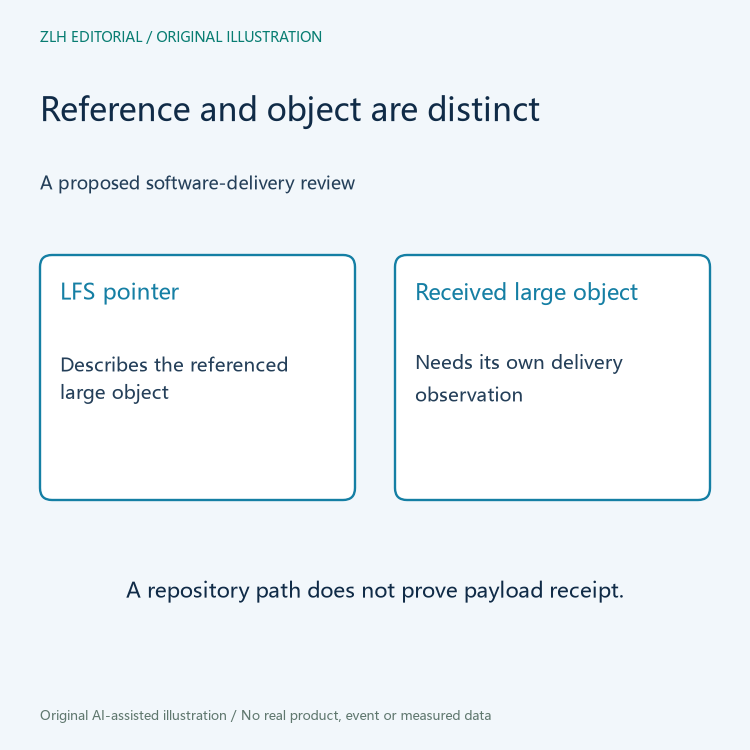
Distinguish the reference from the referenced object
GitHub’s Git LFS documentation explains that references are stored in the repository while the actual large files are stored elsewhere. A pointer acts as the reference to the large object. That is the central distinction a receiving reviewer needs to retain.
A supplier should explain whether the agreed delivery contains the pointer, the large object, or both in their applicable contexts. These can be legitimate parts of different workflows. The acceptance issue is whether the representation matches the promised receiving task, not whether a pointer is inherently defective.
The same documentation notes that inclusion of LFS objects in generated source archives can be configured. The buyer should therefore ask about the actual archive arrangement rather than assume that every downloadable source bundle includes every large object in usable form.
Read pointer fields without treating them as a payload test
The official Git LFS pointer specification describes the pointer representation and fields including version, object identifier, and size. Those fields explain the reference format. They are not themselves a record that the buyer received or inspected the referenced object.
Ask how the supplier connects the pointer to the actual delivered material. A declared size belongs to the described object context; it should not be confused with the visible text file’s size. Similarly, an identifier copied from a pointer is not the same as an independently observed comparison result.
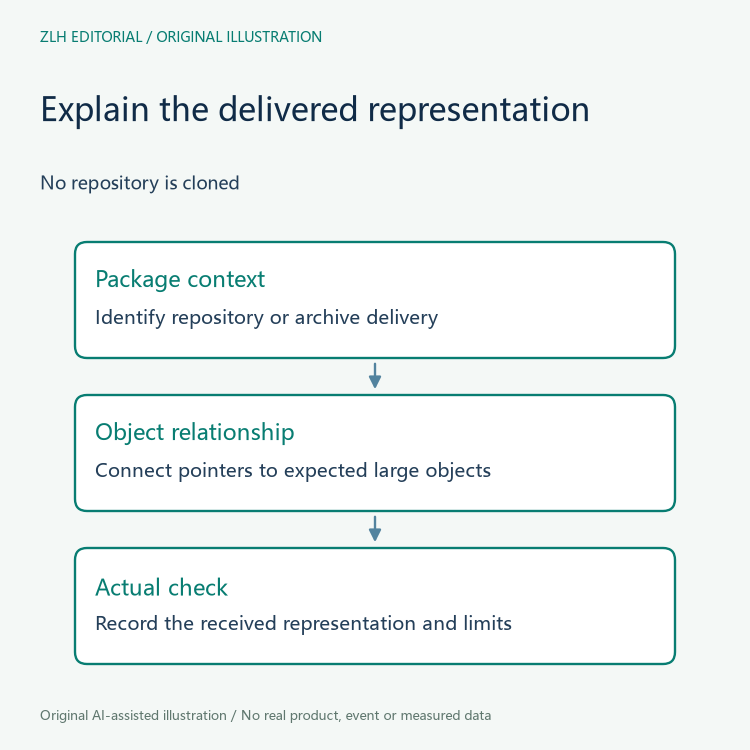
This article calculates no digest and tests no pointer. A later authorized review should identify its actual inputs and observations. A documentation example should remain explanatory material rather than be reused as evidence about a supplier’s repository.
Separate delivery completeness from software suitability
Even if the expected large object is included, the buyer still needs appropriate evidence about its intended role and compatibility. Presence in a delivery does not establish support scope, licensing rights, security properties, or permission to install it on a robot system.
The supplier should identify who can answer a question about a missing or unexpected object. Keep unresolved cases visible. Do not fill a gap with a similarly named file from another source, because that changes the delivery being reviewed and can obscure the object’s provenance.
If the supplier provides a replacement bundle, preserve the earlier record and identify which receiving questions the replacement addresses. An unchanged repository path should not silently carry forward an earlier observation about different bytes or a different packaging arrangement.
Accept a reviewable account of the delivered representation
The handover should distinguish the package received, the pointer relationship, the expected large object, and any actual inspection performed. It can clearly state that an object remains unexamined. That is more useful than calling a repository complete from a screenshot alone.
Ask which conditions a later receiver needs to reproduce the agreed delivery check. Keep that explanation within the authorized workflow and avoid embedding secrets or temporary access details in public documents. The current checklist requires no credentials and performs no retrieval.
Further notes appear in our robot software deals section and the reading directory. The original diagrams contain no real repository, pointer identifier, object size, downloaded artifact, or completed software acceptance result.


