

Robot Software Inventories: Identify the Document Scope
2026-11-04
Robot Software Inventories: Identify the Document Scope
A robot software deal room can contain an inventory file with an impressive list of components. Before interpreting that list, identify the document itself and the scope its creator intended to describe. The current official CycloneDX and SPDX references provide concrete metadata concepts for this reading. They do not turn the presence of an inventory into proof that every component of a delivered robot system has been disclosed. This article interprets document fields and proposes a way to keep their meaning clear in transaction records.
Start with the format and the specification version
The CycloneDX 1.7 JSON reference distinguishes a format identifier from the specification version. A reader needs that context before interpreting the rest of a document. A filename containing an attractive product name does not provide the same information as an explicitly declared format and version.
The practical implication for a deal room is to preserve the actual delivered document and its declared metadata together. Do not edit a declaration merely to make an old file resemble a newer example. A document that a tool can open may still need review against the version it claims, and successful parsing does not answer every question about its coverage.
Here the linked reference is specifically version 1.7. This article does not assert that it is the only supported format or that every supplier must use it. If a transaction uses another version, the reader should retain that fact and use the applicable reference rather than silently mixing field rules from different editions.

Document identity and document revision have related roles
The same CycloneDX reference discusses a serial number and a document version, including how changes relate to revision handling. The important reading distinction is between identifying an inventory document and recognizing its later revision. A component's own version is a different item and should not be used as a substitute for document revision metadata.
In a transaction record, retain the identity supplied with each received inventory and the delivery event that introduced it. If a contributor sends a replacement, ask what changed and which earlier document it supersedes. Do not merge lists from both deliveries without preserving the relationship, because the resulting collection may not represent any inventory the contributor actually issued.
Missing or inconsistent metadata is a question for the contributor, not an invitation to invent an identity locally and attribute it to them. A receiving team may maintain its own internal record key, but that key should remain distinct from metadata declared by the inventory creator.
SPDX makes its own document namespace requirement explicit
The SPDX 2.3.1 document creation information describes a namespace that is unique to the document, including its specific version. Its explanation calls for a new URI when an update creates a new document version. This is a format-specific rule, not a universal instruction for rewriting every software inventory.
A buyer comparing two inventories should first note which format each uses and how that format expresses identity. Similar-looking identifiers do not establish that the documents have identical scope. Nor does a changed namespace, by itself, tell the reader which packages changed or why the contributor issued the revision.
This article supplies no automatic mapping between CycloneDX and SPDX metadata. A conversion may require explicit decisions that should be documented by the responsible team. Treating differently named fields as interchangeable can erase the distinction a later reviewer needs to understand the original delivery.
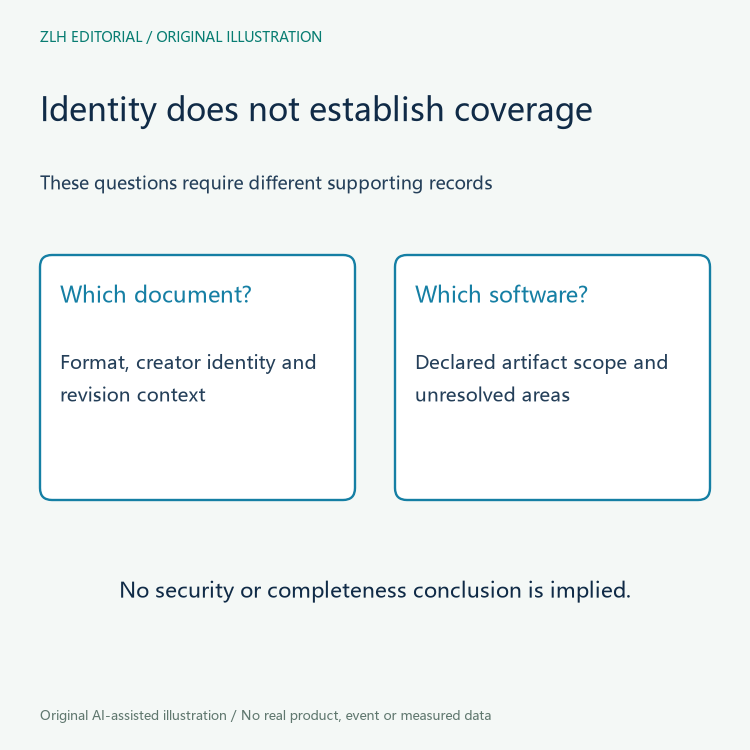
Coverage remains a question about the delivered system
Once the document is identified, ask what it is meant to cover: a named application, a controller image, a development environment or another defined artifact. These are proposed questions, not claims about a supplier's actual inventory. The answer should come from the delivery description and supporting records rather than the reader's impression of the list's length.
A long list cannot establish that omitted software is absent from the system. A short list cannot establish that it is incomplete without knowing the declared scope. Keep exclusions and unresolved areas visible, and distinguish the creator's statement from any independent review performed by the recipient.
Use the inventory without expanding its evidential role
Document metadata helps organize a software handover. It does not independently establish security, license compliance, supplier support or fitness for a robot task. Each of those conclusions needs its own basis, and a transaction summary should identify that basis if it makes the claim.
The original diagrams contain no supplier component list, vulnerability finding or generated inventory. Continue through the robot deal documentation collection and the article directory for related material. Identifying the document before judging its coverage gives later readers a clearer account of what was supplied and which questions remain open.


