

Robot Deal Warranty FAQ: Read Duration and Scope Fields
2026-11-05
Robot Deal Warranty FAQ: Read Duration and Scope Fields
A warranty field in robot deal metadata needs more explanation than an isolated time value. The duration and the scope of a promise describe different parts of the supplied information. A reviewer should retain both and connect them to the particular offer being discussed. This FAQ reads Schema.org's vocabulary through a hypothetical robot deal pack. It does not interpret an actual contract, determine enforceable rights or state that any real robot or service is covered.
What does the structured promise represent?
The Schema.org WarrantyPromise definition describes a structured value for the duration and scope of services supplied free of charge in the event of a product defect or malfunction. Its properties include durationOfWarranty and warrantyScope. The page also shows that a warranty promise can be included in an Offer. These relationships explain metadata structure; they do not verify the truth or completeness of a particular seller's description.
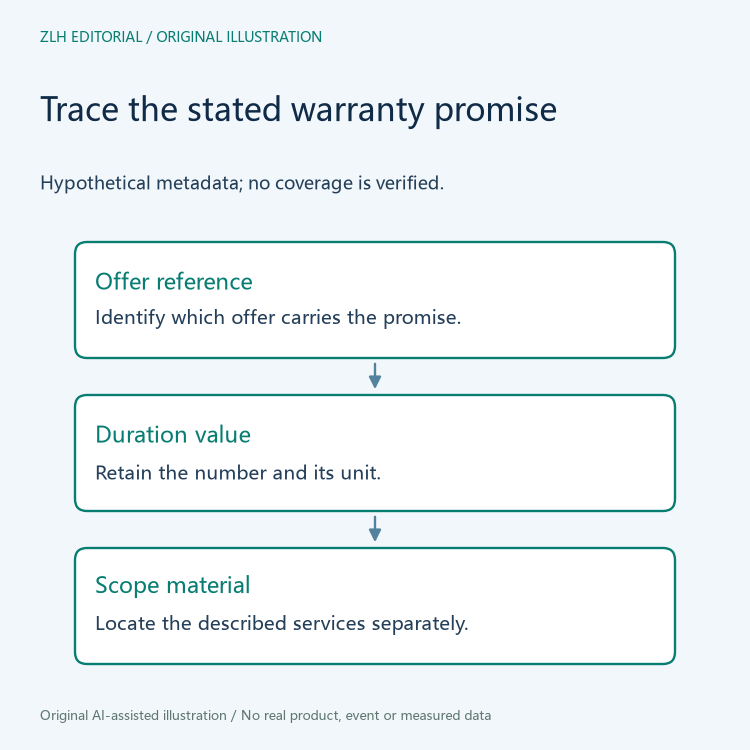
Imagine a hypothetical deal room containing an offer summary and a separately supplied service document. The metadata may point toward a promise worth investigating, but the reviewer still needs to identify which offer and product it describes. A detached warranty label copied into a spreadsheet may lose that relationship. Preserve the source object and reference so the next person can find the actual statement being discussed.
What does the duration field need alongside its number?
The durationOfWarranty property definition expects a QuantitativeValue. It lists common unitCode values for years, months and days. The number and its unit belong together. A reviewer should not infer the unit from a nearby marketing sentence or replace it with a more familiar period while leaving the original representation undocumented.
For the hypothetical pack, keep the duration value, unit and the full property path. If the supplied object omits enough information to interpret the period, record that gap. Do not silently convert a duration into an expiry date: doing so would additionally require a documented starting point and any relevant conditions. This FAQ calculates no dates and has no evidence of when a particular promise began, ended or was extended.
Does a longer period explain which services are covered?
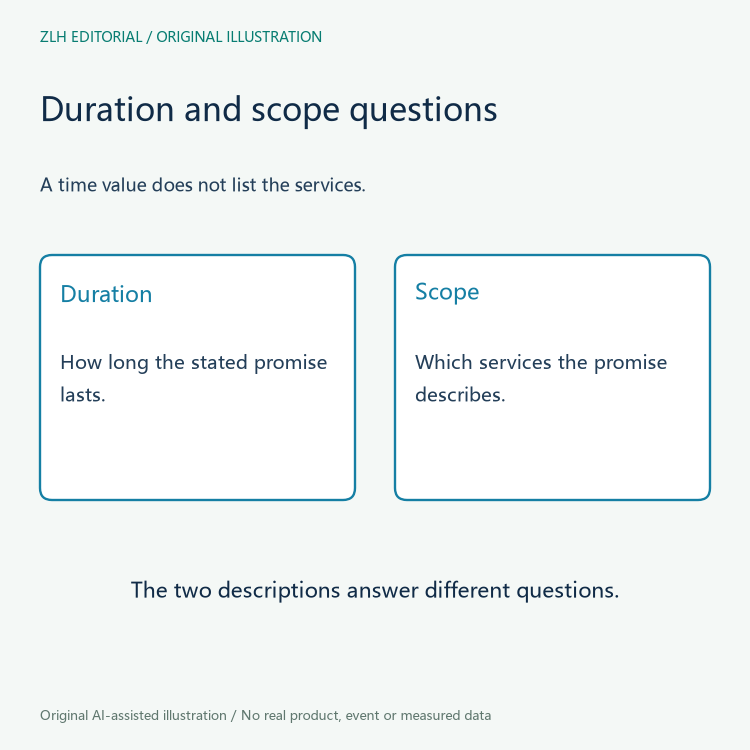
The duration answers a time-length question; warrantyScope is a separate property. An isolated duration does not enumerate covered work, components, response channels or other conditions. A reader should request the scope material rather than treat a longer number as proof of broader service. The definition of the structured value does not supply the omitted terms of an actual commercial promise.
Suppose two hypothetical offer summaries show different periods while their scope documents are absent. The comparison can report the two stated periods and the missing scope information. It cannot responsibly rank their coverage from that evidence alone. Equally, matching durations do not establish identical promises. The review should preserve what each source actually says and identify which additional documentation would make a useful comparison possible.
How should offer revisions be connected?
The inspected Schema.org pages label themselves as development-version material and display vocabulary version information. The deal record has its own separate revision context. Retain the offer date or revision and the version of the supplied promise description rather than assume that a vocabulary page establishes which terms applied to a transaction. The schema and the commercial document play different roles in the evidence file.
If a hypothetical provider later adds a scope document, attach it to the offer revision it claims to explain. Preserve the earlier summary and the clarification. A change in metadata should not be narrated as an accepted extension or a completed service event without supporting records. Where the provider's explanation leaves the applicable version uncertain, keep that uncertainty visible for the person reviewing the actual deal.
What is a precise documentation finding?
A precise note identifies the offer, the referenced warranty promise, its stated duration and unit, and the material describing scope. It states which fields or documents were not supplied. That is more useful than a general claim that the deal includes a comprehensive warranty. It also avoids treating an empty structured-data field as a complete account of the buyer's possible rights, which would require a different kind of assessment.
No seller, product or contract has been assessed here. The diagrams are original reading aids containing only conceptual field relationships, with no invented coverage period or approval. Related methods are available in the technical material category and related resource category. Keeping warranty duration, scope and offer identity traceable gives a deal reviewer concrete requests to make while leaving any real coverage conclusion to the actual supplied terms and appropriate review.


